

Photo and Video Production for Social Media: It’s an Art and a Science
Social media content has never been easier to make. Creating social content that actually earns attention, feels right for the platform, reflects the brand and drives a business result is another story.
That’s why we think good social content is both an art and a science. The art is the story, personality, emotion, visual style and point of view. The science is understanding how people behave on each platform, which formats tend to perform best, how quickly you need to earn attention and what you want someone to do after they watch. The strongest social content gets both right.
Great production doesn’t automatically equal great social content
This is one of the biggest distinctions brands should understand before a shoot. A beautifully lit, perfectly composed video can still underperform if the opening is slow, the format is wrong, the message takes too long to land or it simply feels like an ad someone wants to scroll past.
At the same time, “authentic” shouldn’t become an excuse for content without intention. Social content can feel spontaneous and still be thoughtfully planned. In fact, the strongest shoots often leave room for both polished brand assets and faster, more conversational content that feels native to the feed.
And the opportunity is significant. HubSpot’s 2026 State of Marketing research found that short-form video delivers the highest ROI of any content format for 48.6% of marketers, ahead of long-form video, livestreaming, user-generated content and blog posts. Nearly 30% of marketers also plan to invest more in short-form video than any other format.
So the question isn’t really whether brands need video anymore. It’s how to produce the right video.
-
Start with what should happen next: Before deciding whether something should be a reel, carousel, testimonial, founder video or product demo, start with the business goal. Are you trying to build awareness, explain a product, establish credibility, drive a click, or give someone a reason to save or share? The answer should shape the format, message and production approach.
-
Earn attention fast: Short-form video works best when it earns attention quickly. TikTok recommends making a strong first impression and introducing the brand early, while LinkedIn advises putting the most impactful content up front. Lead with the most interesting idea, visual, problem, result or question rather than a slow introduction.
-
Shoot for the screen, not just the camera: If Reels, TikTok or YouTube Shorts are part of the plan, vertical should be considered during production, not after. Meta has reported that 9:16 Reels ads with audio and messaging in the safe zone delivered a 34.5% lower cost per result than image ads in split testing. If you need both horizontal and vertical assets, plan for both while the cameras are rolling.
-
Don’t treat photography as the supporting act: Photography still matters, especially for carousels and campaign assets. In Socialinsider’s 2026 Instagram benchmark data, carousels held a slight lead in overall engagement, while reels generated stronger comment activity and carousels led on saves. A smart shoot should use both formats for what each does best.
-
Not everything should look like an ad: Sometimes polished brand content is exactly what you need. Other times, content works better when it feels more natural and conversational. Professional doesn’t have to mean overproduced, and authentic doesn’t have to mean unplanned.
-
People still matter: Faces, voices and real perspectives create connection in ways product shots alone often can’t. LinkedIn reports that short-form video creation on its platform is growing at twice the rate of other post formats, and 58% of B2B marketers say video delivers their best results. Strong production should support the story and personality, not overpower it.
-
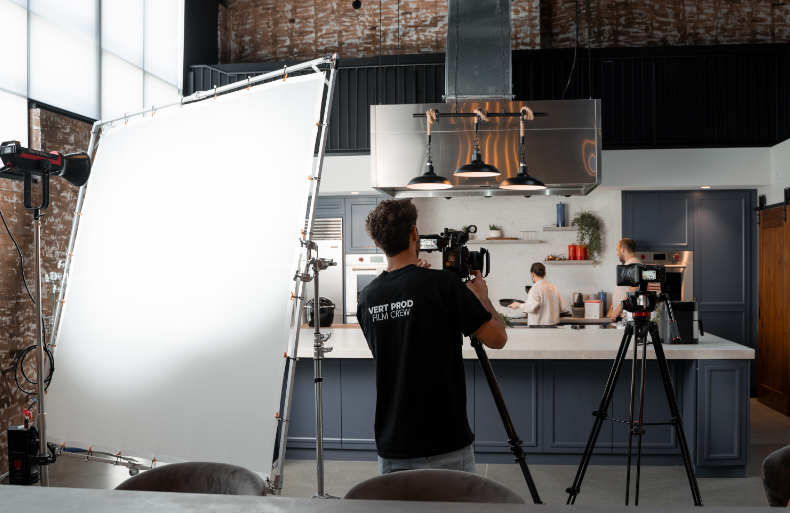
One shoot should create a content library: If the location, talent, crew, equipment and setup are already in place, plan the day around a library of assets, not a single post. One founder interview can become a longer story, several short-form clips, still photography, paid-social variations and behind-the-scenes content.
-
Don’t make every platform wear the same outfit: Repurposing is smart, but copy-and-paste isn’t always. TikTok may need a faster opening, Instagram may benefit from a stronger visual first frame, and LinkedIn may give an executive more room to explain a point of view. Same story, different edit.
-
Think beyond likes: Different formats should be measured differently. Shares may matter more than likes for awareness, saves can signal value for educational content, and paid creative should be judged on metrics like cost per result, click-through rate, conversion and creative fatigue. The goal is not simply engagement. It’s the right outcome for the content.
The AFTR Take
The art of social content is knowing how to tell a story people actually want to watch. The science is knowing how to shape that story for the platform, audience, format and business objective. You need both.
Start with the audience and business goal. Know the formats and deliverables before production begins. Capture vertical and horizontal intentionally. Create a mix of polished and human content. Use photography and video for what each does best. And plan the shoot so one production day creates a content library, not just one post.
Because great social media production isn’t about creating the most content. It’s about creating the right content, in the right formats, with enough variety to keep working long after the shoot is over.
That’s the after effect we’re always thinking about at AFTR.
Sources: HubSpot, 2026 State of Marketing; TikTok for Business, Creative Effectiveness; Meta for Business, Reels Ads; Socialinsider, 2026 Instagram Organic Benchmarks and Instagram Engagement Report; LinkedIn, Video Ad Tips.

Leave a comment
This site is protected by hCaptcha and the hCaptcha Privacy Policy and Terms of Service apply.